



How to Support Your Skin Barrier Naturally at Home (An Australian Guide)
If your skin suddenly feels like it's not yours anymore — you're not imagining it
Skin can shift fast. One week it's calm and behaving. The next it's flaking after cleansing, stinging when you apply serum, flushing in the wind, or breaking out in rough little patches that won't settle no matter what you layer over them.
Nine times out of ten, it's coming back to one thing.
Your skin barrier.
When your skin barrier is compromised, everything downstream gets harder — moisture escapes, irritation creeps in, products stop working, and skin that used to feel resilient starts feeling fragile.
The good news: with the right approach, it can absolutely be brought back into balance. You don't need a ten-step routine or a cupboard full of actives. And you can do most of it at home, gently, with ingredients that have supported skin for centuries.
Here's the complete Australian guide to what's actually going on — and how to support your skin naturally, starting today.
What is the skin barrier?
Your skin barrier is the outermost layer of your skin — a fine, protective film made up of skin cells, natural oils, ceramides and fatty acids. It's sometimes called the acid mantle or moisture barrier.
Think of it as your skin's security system. It does three big jobs:
- Locks moisture in so skin stays hydrated and plump
- Keeps stressors out — pollution, wind, harsh weather, environmental irritants
- Regulates how your skin responds to the products you put on it
When it's working well, your skin feels smooth, balanced, resilient and comfortable. When it's compromised, it feels like a completely different face.
Signs of a damaged skin barrier
You might be dealing with a damaged skin barrier if you notice:
- Persistent dryness that doesn't improve no matter how much moisturiser you apply
- Tightness straight after cleansing
- Sensitivity or reactivity to products that used to work fine
- Redness or flushing, especially on cheeks and around the nose
- Rough, uneven texture or small flaky patches
- Skin that feels "thin" or fragile
- Stinging or burning when you apply active ingredients
- Dull, lacklustre appearance no matter what you use
If two or more of these sound familiar — your barrier is asking for support, not more product.
What causes a damaged skin barrier?
Barrier disruption usually isn't one big thing. It's a stack of small ones.
Seasonal change — cooler weather and indoor heating strip moisture fast, which is why so many Australians notice their skin shift as autumn rolls in or when air-conditioning runs all summer.
Over-cleansing — washing your face twice a day with a stripping cleanser, or using foaming cleansers morning and night.
Too much exfoliation — AHAs, BHAs, retinol and scrubs layered too often. More is not more.
Harsh or overly active skincare — potent actives without supportive hydration underneath.
Environmental stress — wind, sun, pollution, dry air, air conditioning, long hot showers.
Stress, sleep and hormones — skin reflects what's happening internally.
Pre-existing sensitivity — some skin is naturally more reactive and needs gentler support year-round.
The common thread: your skin is telling you it needs less stripping, less layering, and more comfort.
What to do when your skin barrier is damaged
The first instinct when skin feels reactive is to add more — more serums, more actives, more "repair" products. Resist it.
Here's the simplest first-response, starting tonight:
- Pause everything active. Retinol, vitamin C, AHAs, BHAs, exfoliants — all of it. Your skin needs rest, not stimulation.
- Strip your routine back to three steps. Gentle cleanser. Hydrating layer. Protective balm.
- Switch to a non-foaming cleanser. Cream, oil, or gentle cleansers only.
- Apply a supportive balm overnight. This is when skin does most of its natural repair work. A conditioning balm creates a gentle layer that helps skin feel calmer and more comfortable while it rebuilds.
- Protect during the day. SPF, year-round. Wind and sun accelerate barrier damage.
- Wait. Many people notice improvement within 2–4 weeks of consistent, gentle support. Skin rebuilds on its own timeline — not yours.
That's it. No miracle product. No ten-step routine. Just less, more gently, for longer.
How to support your skin barrier naturally at home
Once you've done the reset above, these are the ongoing habits that keep your barrier strong and your skin comfortable — all of them you can do at home, with simple, natural approaches.
1. Simplify and stay simple
Three to four products, used consistently, beat ten products used chaotically. Find what works and stop adding things.
2. Stop stripping
Swap foaming cleansers for cream or oil-based ones. Shorten your shower. Pat dry instead of rubbing. Avoid anything that leaves your skin feeling "squeaky clean."
3. Layer hydration under an occlusive
Hydration without a seal evaporates in minutes. Look for humectants (ingredients that pull moisture into the skin) layered under something that seals that moisture in — like beeswax, plant butters - like shea butter, or a nourishing balm.
4. Use a protective, conditioning balm
This is where a high-quality balm earns its place. A good balm creates a supportive layer over the skin, helping it feel calmer, more comfortable and more balanced while it rebuilds itself.
5. Respect overnight
Night is when skin does its most important recovery work. A small amount of balm applied as the final step of your evening routine makes a real difference in how skin feels by morning.
6. Protect during the day
SPF year-round, even in winter, even in Melbourne cloud cover. UV is one of the fastest barrier disruptors there is.
7. Be patient
Barrier support is a marathon, not a weekend project. Many people notice improvement within 2–4 weeks of consistent care — but the compounding benefit of months of gentle, supportive habits is where real resilience is built.
Why manuka honey, royal jelly and beeswax are valued for supporting the skin
Nature got here long before lab-engineered ceramides did. Certain bee-derived ingredients have been used for centuries to help condition and comfort skin — and modern science is finally catching up on why.
Australian Manuka honey (high MGO) is one of the most bio-active honeys in the world. It's prized in skincare for its rich, nourishing profile and its ability to help skin feel comforted and conditioned.
Royal jelly is the substance worker bees produce to feed the queen — and it's packed with proteins, amino acids, vitamins and lipids. In skincare, it's valued for its nutrient density and its ability to help skin feel softer, plumper and more supple.
Unrefined beeswax creates a breathable protective layer over the skin. Unlike petroleum-based occlusives, it lets skin function naturally while helping seal in moisture and shield against environmental stress.
Together, these ingredients offer something actives alone can't — a gentle, supportive approach for skin that's feeling dry, reactive, or out of balance.
Choosing the right balm for dry, sensitive skin
Not all balms are formulated equally. Many are petroleum-based, bulked with fillers, or rely on fragrance for appeal.
When you're choosing a balm to support compromised skin, look for:
- High-grade, bio-active ingredients (not cheap fillers)
- Minimal, purposeful formulation — every ingredient should be doing a job
- No synthetic fragrance or harsh additives
- Ingredients designed to support the skin barrier, not mask symptoms
- Transparent sourcing — where does the honey come from? What grade?
Australian-made, small-batch and ingredient-led is where you'll find the good stuff.
How QueenBEE Secrets fits in
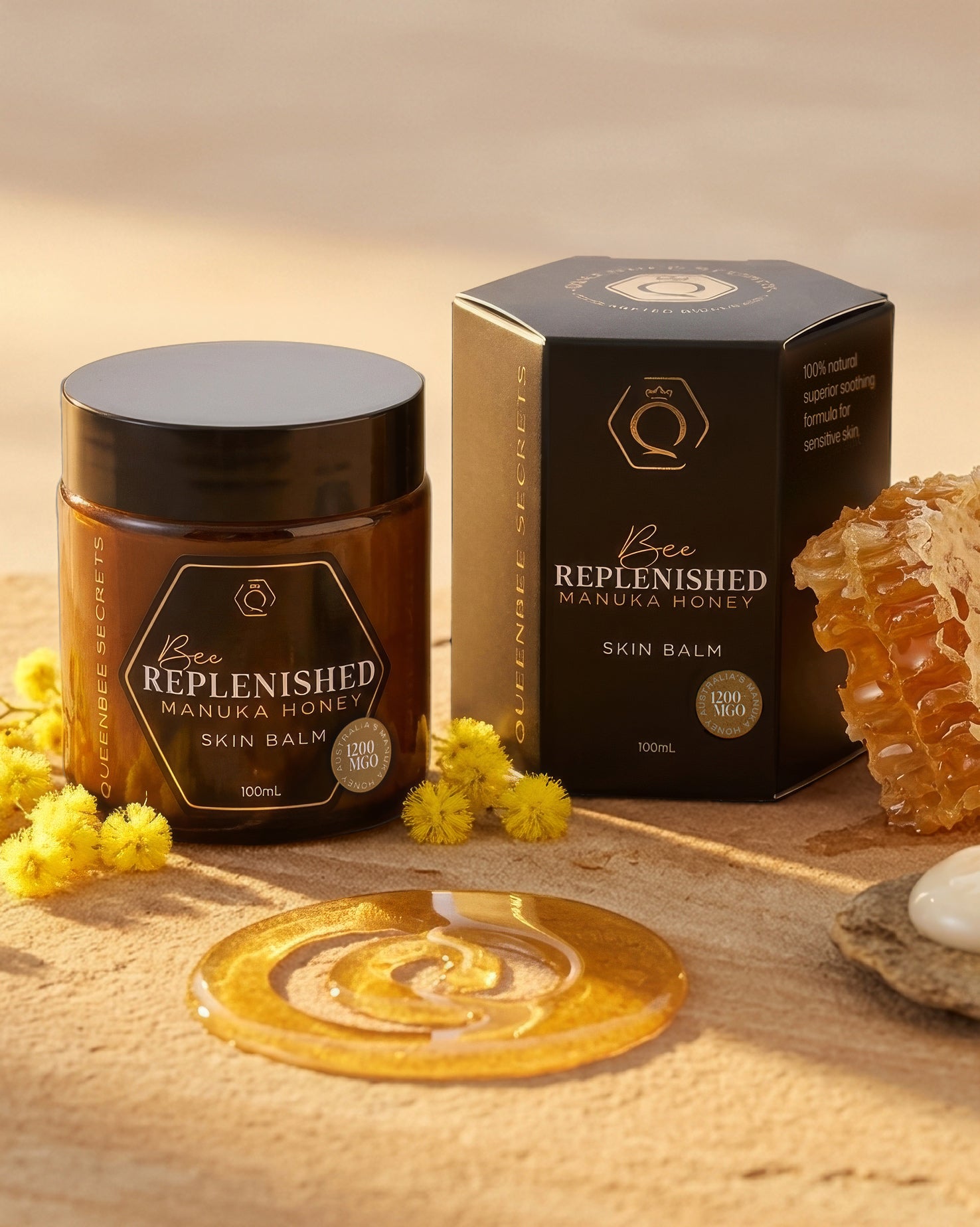
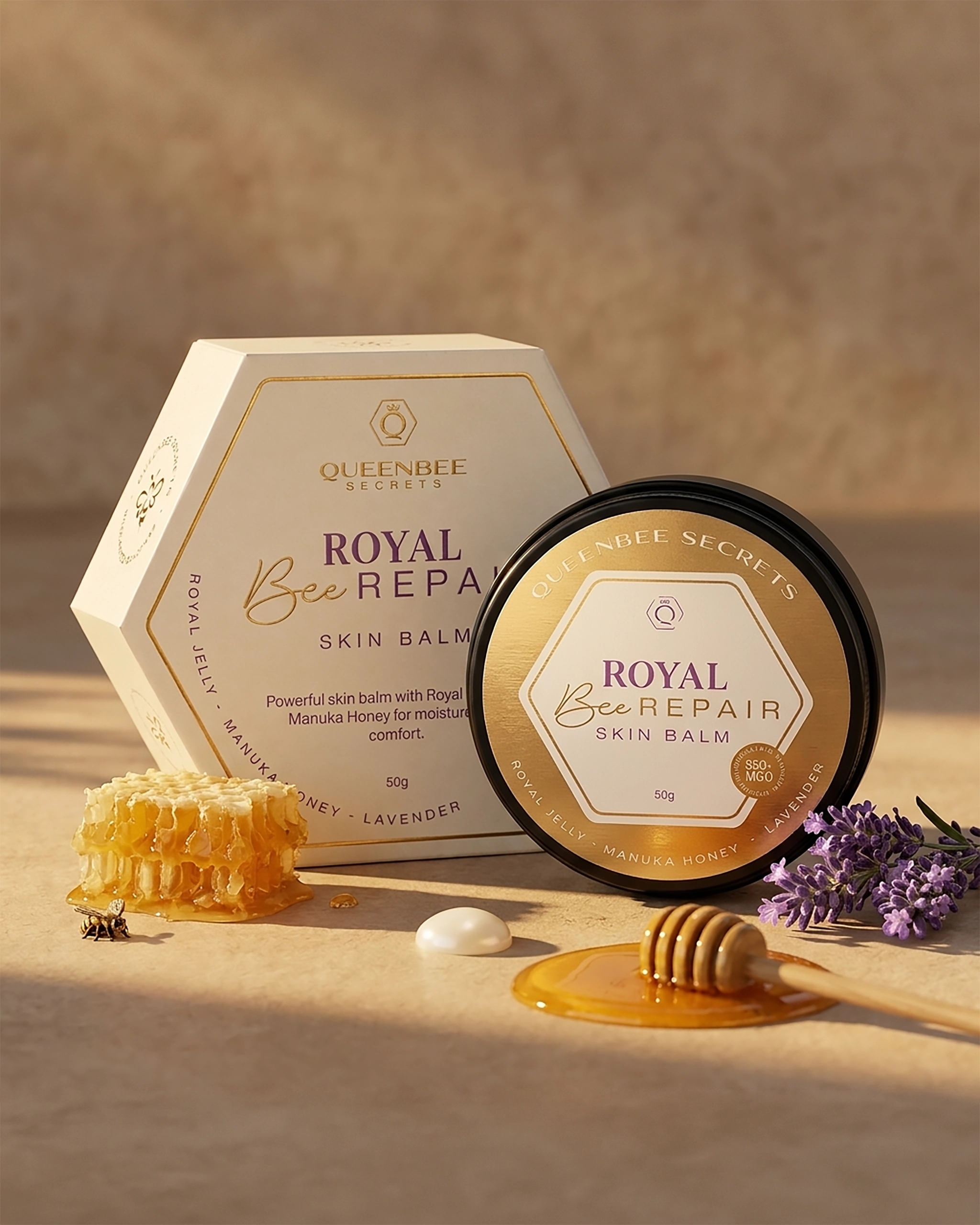
Our balms are built around three ingredients we believe in: high-grade Australian Manuka honey, nutrient-rich royal jelly, and unrefined Australian beeswax.
No synthetic fragrance. No fillers. Just purposeful, small-batch formulations designed to help support and condition skin that's feeling dry, reactive or out of balance.
Frequently Asked Questions
How long does it take to repair a damaged skin barrier? Many people notice improvement within 2–4 weeks of consistent, gentle support. Full recovery can take 6–8 weeks or longer depending on the severity and underlying causes.
Can you repair a damaged skin barrier overnight? Not fully — barrier rebuilding takes time. But overnight is when skin does its most important recovery work, so applying a supportive, conditioning balm before bed can make a noticeable difference in how skin feels by morning. Consistency over weeks is what brings lasting change.
What should I do when my skin barrier is damaged? Pause all active ingredients, simplify your routine to three gentle steps, switch to a non-foaming cleanser, and apply a conditioning balm overnight. Protect with SPF during the day. Give it 2–4 weeks of consistency before expecting major change.
Can I support my skin barrier in a week? A week is enough time to see initial improvement — less tightness, less stinging, calmer feeling skin — if you stop doing what's causing the disruption and commit to a simplified routine. Full recovery takes longer.
Does skin barrier support work for oily skin too? Yes — absolutely. Oily skin can have a compromised barrier just as easily as dry skin, and the signs are often mistaken for "bad skin days." A lightweight, conditioning approach works for oily skin without adding heaviness.
Can I still use actives like retinol or vitamin C? When your barrier is compromised, it's best to pause all actives for at least two weeks. Once skin feels calmer, reintroduce slowly — one active at a time, every second or third night.
Is manuka honey good for sensitive skin? High-grade manuka honey is valued in skincare for its gentle, conditioning properties. As with any new ingredient, patch test first, especially if you have known sensitivities to bee products.
What's the difference between dry skin and a damaged skin barrier? Dry skin is a skin type — it produces less oil. A damaged barrier is a condition — skin is losing moisture faster than it can retain it, regardless of skin type. Oily skin can absolutely have a compromised barrier too.
Can Australian weather really affect my skin barrier? Absolutely. From dry summer air and air-conditioning to winter wind and indoor heating, the Australian climate puts real demands on skin. Cold air, UV, wind and low humidity all accelerate moisture loss and can disrupt the barrier within days.
Are QueenBEE Secrets products suitable for reactive skin? Our formulations are minimal, fragrance-free and built around gentle, conditioning bee-derived ingredients. We always recommend patch testing.
Share:
Why Your Skin Changes in Autumn (And What to Do About It)
QueenBEE Secrets Best Sellers